


How to Make Soft-Dried Mango in the Rainy Season | Daxwell
The rainy season brings record-high relative humidity, posing significant technical challenges to traditional soft-drying processes. Without precise environmental control, mangoes easily suffer from enzymatic browning, syrup leakage, sour fermentation, or rapid mold contamination. Mastering the key techniques for soft-drying mangoes during the humid season will ensure consistent batches of vibrant golden, chewy, and naturally flavorful dried fruit regardless of adverse outdoor weather.
🥭 1. Selecting the Optimal Variety and Ripeness Stage
Raw material accounts for up to 70% of the final product's quality. During rainy periods, selection must be rigorous to avoid waterlogged or overripe fruit.
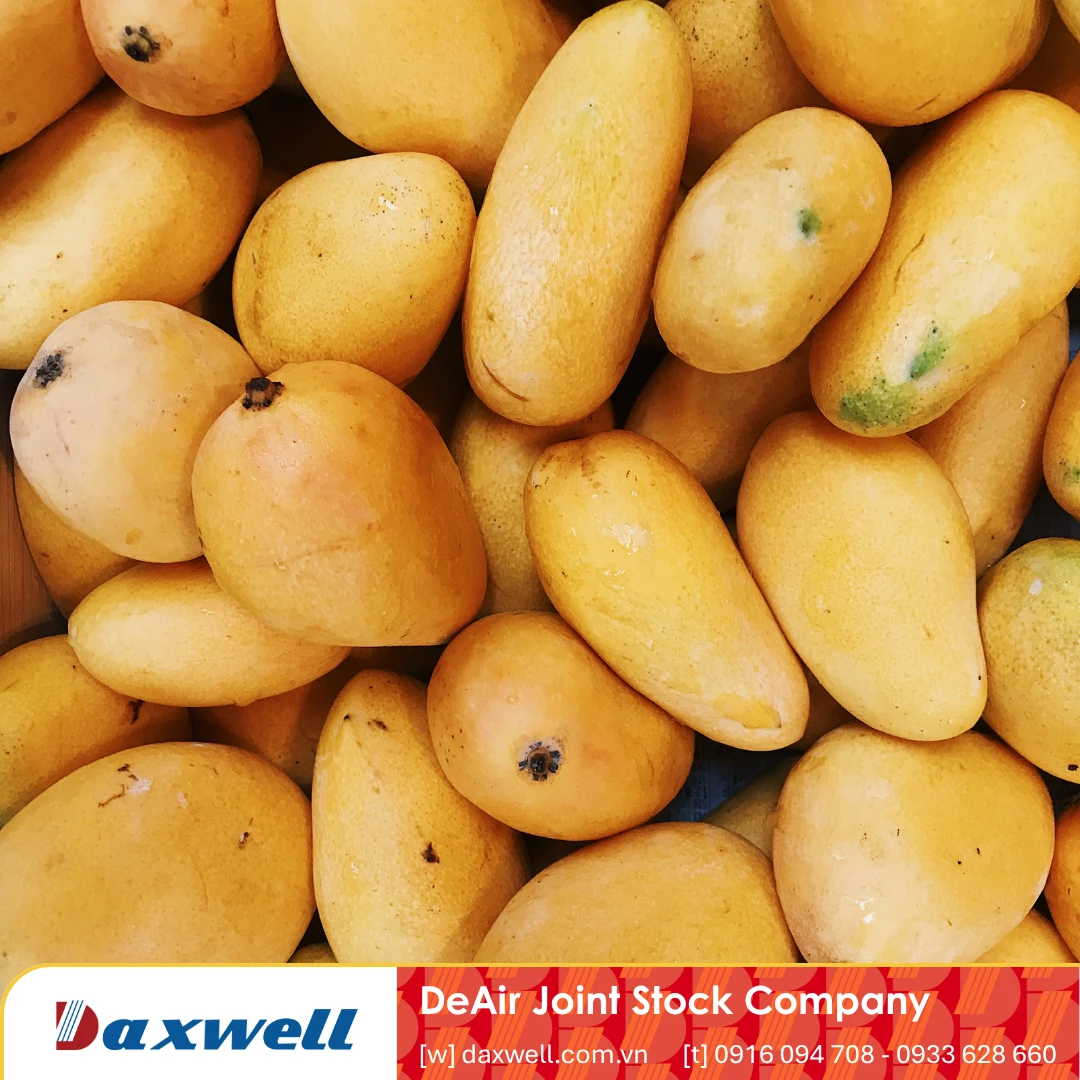
- ✔ Suitable Mango Varieties: Cat Chu, Keo, and Hoa Loc varieties are top-tier choices due to their thick pulp, minimal fiber content, and balanced natural sweetness.
- ✔ Ideal Maturity Stage: Select fruit at the semi-ripe (breaker) stage—peel beginning to show a golden blush while the pulp remains firm to gentle pressure. Avoid overripe mangoes, as their collapsed cellular structure turns mushy upon cutting and bleeds excessive syrup during drying. Conversely, underripe fruit results in a tough, tart, and unpleasantly fibrous texture.
🔪 2. Proper Pre-treatment to Retain Color and Texture
The preparation stage directly dictates the visual appeal, vibrant amber hue, and cohesive texture of the dehydrated fruit.
- 🔹 Washing and Uniform Slicing: Thoroughly wash away external sap, peel cleanly, and slice the cheeks into uniform slabs with a thickness of 0.8 cm to 1.0 cm. Slicing too thin leads to over-shrinkage and a dry, brittle mouthfeel; slicing too thick drastically prolongs dehydration cycles and traps internal core moisture.
- 🔹 Anti-Oxidation Soaking: Submerge slices in a mild food-grade ascorbic acid (Vitamin C) or diluted lemon-salt solution for 10–15 minutes. This deactivates polyphenol oxidase enzymes, completely preventing surface discoloration and browning.
- 🔹 Flash Blanching and Draining: Quickly blanch slices in hot water at 70°C–80°C for 1–2 minutes, shock immediately in cold water, and drain completely before tray loading. This thermal treatment softens fiber structures and accelerates capillary moisture migration.
⚙️ 3. Precision Temperature and Dehydration Profiles
Under damp, rainy conditions, open sun-drying is completely unviable. Employing specialized food dehydrators or Daxwell Heat Pump Dehydration Technology offers the ultimate closed-loop solution, guaranteeing 100% production autonomy.
- 🔸 Phase 1 (Initial Moisture Evaporation): Dehydrate at 65°C – 70°C for the first 2 to 3 hours. Rapid initial surface moisture extraction suppresses microbial activity and eliminates sour fermentation risks caused by ambient humidity.
- 🔸 Phase 2 (Texture & Soft Cure): Reduce temperature to 55°C – 60°C and maintain continuously for 6 to 8 hours (depending on slice thickness). Gentle low-temperature drying concentrates natural sugars progressively, yielding a pliable, chewy texture without surface case-hardening.
- 🔸 Tray Rotation: If operating static cabinet dryers, rotate tray tiers and turn slices every 3–4 hours to maintain uniform aerodynamic air distribution and thermal equilibrium.
🎥 Inside Look: Commercial Mango Heat Pump Drying Facility
Watch the commercial-scale operation delivering export-grade golden color and tender chewiness:
Watch on YouTube: Inside 500kg Convective Heat Pump Mango Drying Room ↗
✨ 4. Identifying Optimal Moisture and Quality Standards
👁 Visual & Surface Touch
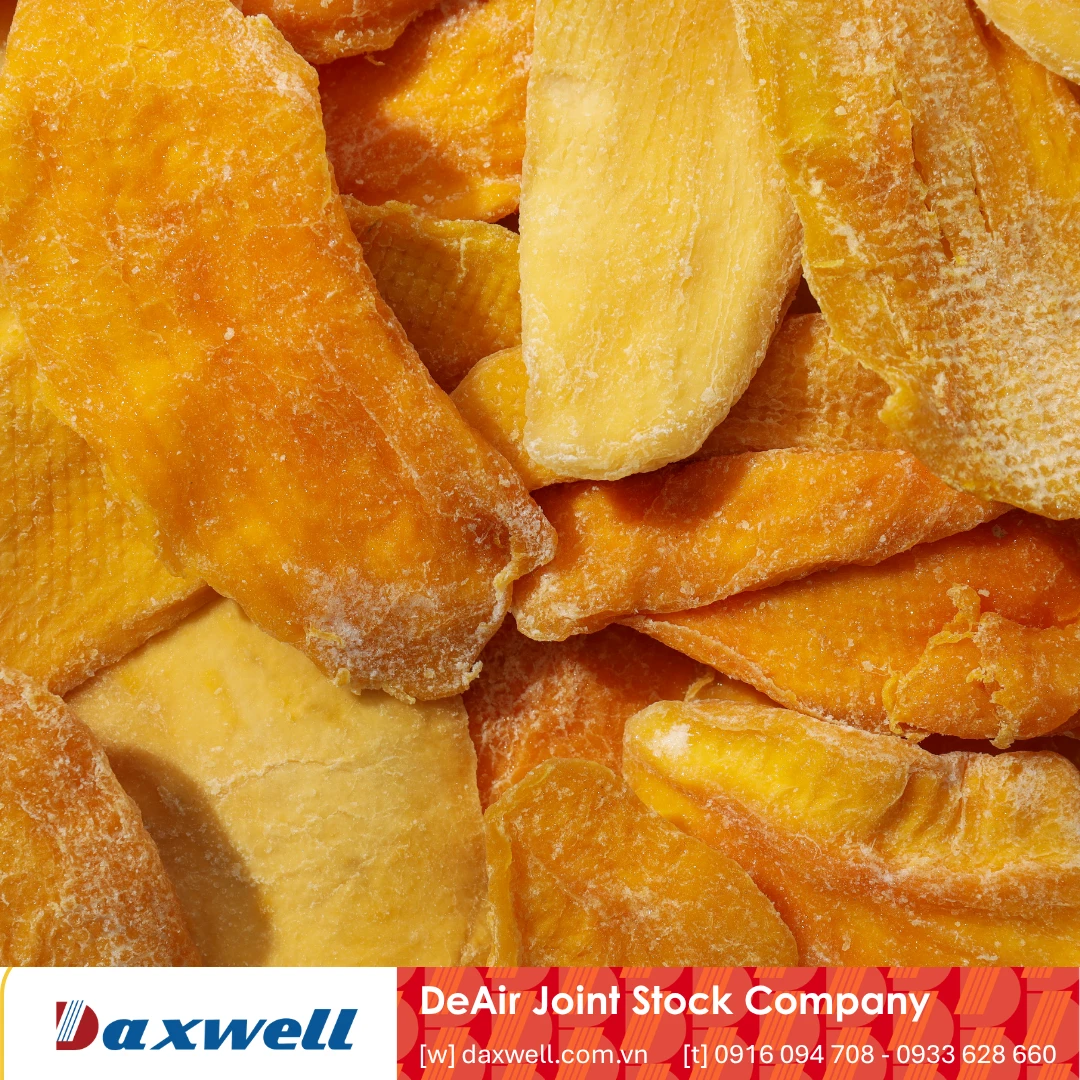
Bright natural amber-golden color, dry to the touch, and non-sticky when handled with dry fingers.
🤏 Elasticity & Texture
When bent, the slice bends flexibly without snapping (over-dried) or tearing into watery pulp (under-dried).
🍯 Flavor Profile
Harmonious sweet-tart taste rich in tropical mango aroma, with no sour off-notes, yeast odors, or scorching.
📦 5. Post-Drying Storage Rules in High-Humidity Climates
High ambient relative humidity causes rapid moisture reabsorption. To ensure a stable shelf life of 3 to 6 months:
- ✔ Complete Thermal Equilibrium: Allow batches to cool down to room temperature before packaging. Packing while warm triggers inner condensation, causing immediate mold growth.
- ✔ Vacuum Sealing or Moisture-Proof Bags: Store in thick aluminum foil zipper pouches or heavy vacuum bags with an oxygen absorber/food-grade desiccant sachet.
- ✔ Controlled Environment: Store in a cool, ventilated area away from direct sunlight. For prolonged shelf life, cold storage (4°C–10°C) keeps the golden color and chewy texture intact over extended periods.
Consulting & Quotation for Agro-Drying Solutions
Get customized heat pump drying chamber sizing and energy-efficient aerodynamic designs from Daxwell HVAC specialists.

MOTTO
Prestige, do it right the first time and trustworthiness are always in our top manners.
QUALITY
Quality is our enthusiasm in business activities.
PRIDE
We are extremely proud to be reliable company recognized by customers.
PRICE
Committed to providing our customers the total solutions to maximize efficiency and minimize investment and operating costs.
SERVICE
Serve wholeheartedly.
AFTER - SALES
Experienced and well-qualified technicians ensure the best and fastest ways to take care of customer’s equipment.